Overview:
- Genre: Space Flight Sim/First-Person-Shooter/MMO
- Platform(s): PC
- Role: Senior & Principal Level Designer
- Release Date: A playable Alpha of SC’s ‘persistent universe’ that is constantly being updated is available to project backers since December 2015.
‘Star Citizen’ is a multiplayer, space trading and combat simulation game on PC. During my time at Cloud Imperium Games I have designed locations for the persistent universe of Star Citizen (not the singleplayer campaign ‘Squadron 42’).
Responsibilities
Flagship Locations: I was the design owner of two flagship landing zones/capital cities (‘Lorville’ and ‘New Babbage’). I developed these locations in collaboration with the other departments from paper design to release.
Modular Designs: I designed plug & play modules that are used across many locations, for example: hangars, security checkpoints and transit platforms. These modules’ visuals could be customized to each location but had standardized metrics and layouts for usability and faster production times. I was part of the early development of modular locations (e.g. space stations) that could be procedurally generated.
Developing for a massive universe: The persistent universe of Star Citizen is a universe without loading times. Any content is getting streamed-in in real-time. To ensure that transit systems, air-traffic-controllers, AI etc. in your level is working correctly, this requires rigorous implementation and testing and adds an extra-layer of challenge.
Mentorship: I established best-practices, created documentation and assisted less experienced Level Designers on the team.
Maintenance: I inherited the space station ‘GrimHEX’ by a Level Designer who left the studio and frequently applied bug fixes and updates to it over time.
Locations:
LORVILLE

Out of the four corporate-owned capital cites in the Stanton system, ‘Lorville’, on the planet of Hurston, was the first major planetary landing zone that we’ve built for the Persistent Universe and that I was responsible for from the level design-side.
- Matching the vision: Architecture and atmosphere had to match the narrative behind the location: a dystopian industrial city owned by an oppressive mega corporation that focuses on the production of ship weapons and components. I incorporated a brutalist architecture style that matches such an atmosphere as early as during the whiteboxing phase.
- Achieving scale: I had to design a landing zone with a scale/footprint that does the vision of a huge city justice while allowing players to reach each point-of-interest in an acceptable travel time. I also had to plan it in a way that was achievable to be built with the available time and ressources. The main points-of-interest are the space port for take-off and landing, two commercial areas (the grubby workers’ district and the posh Central Business District) and six city gates with ground vehicle access dotted around the perimeter of the city. These areas are handcrafted locations ready to be accessed by players on foot. I designed a network of fast trains that players can ride on and that connects the playable areas. The spaces in-between are modular city tiles that make up a large portion of the city footprint. They are not accessible to players but create that incredible sense of scale.
- Hub Design: The districts that players could access on foot were designed like hubs in a MMO including shops, questgivers, apartments and social spaces.
Screenshots


Final Art by Boy Sichterman, Jussi Keteli, Fumio Katto, Jack Kirkham and additional screenshots by Mr. Hasgaha.
NEW BABBAGE

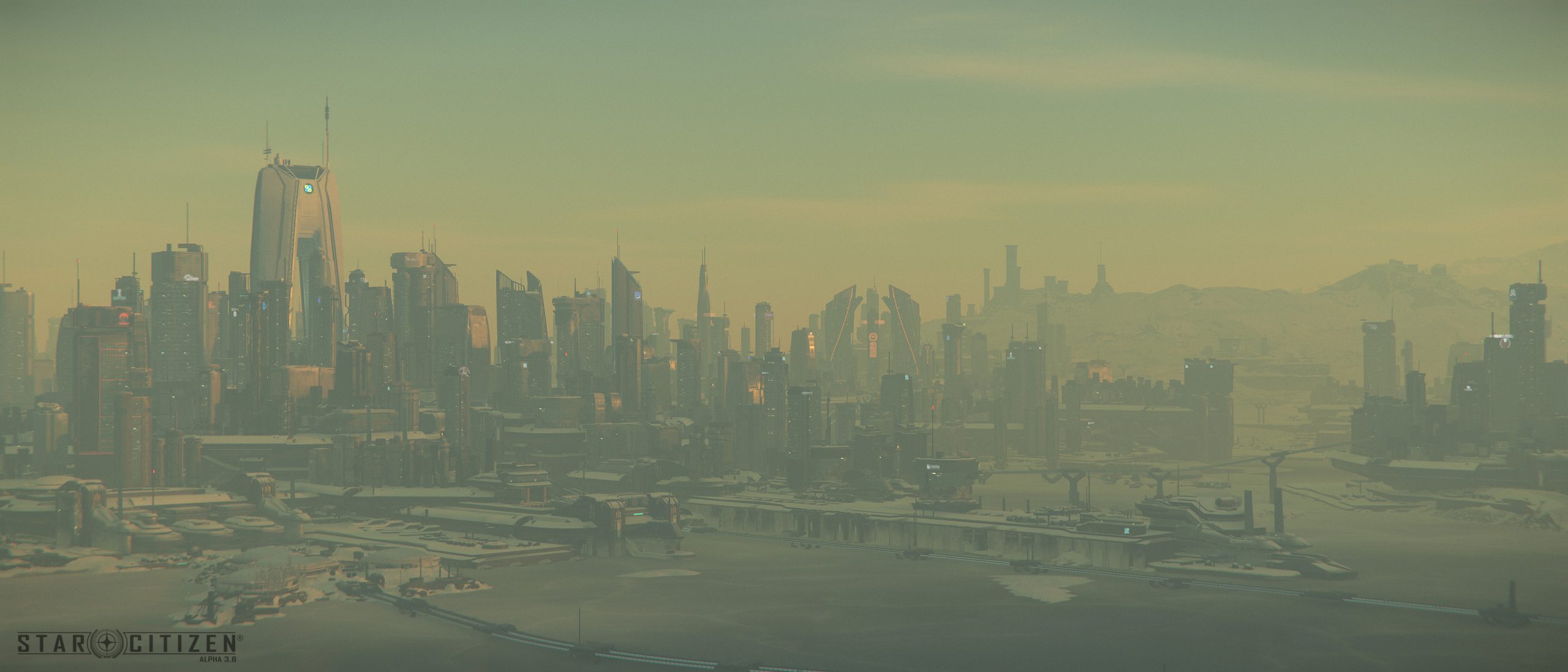
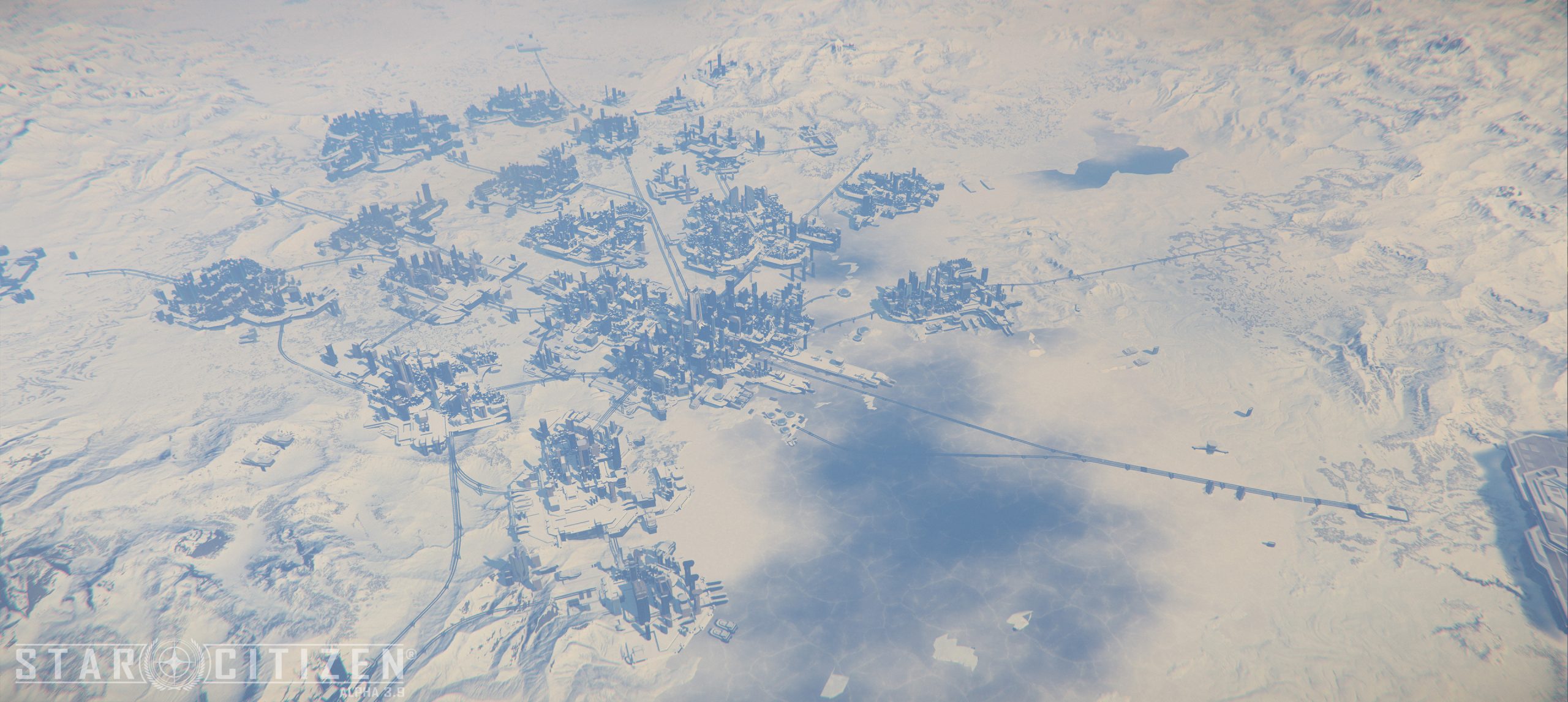
The second flagship landing zone that I worked on is the capital of microTech: ‘New Babbage’. The chip manufacturer turned the terraforming accident that froze the entire planet into their lucky fortune by using the freezing temperatures to cool their hardware. Most business and social life happes underneath the giant glass domes of New Babbage. A chance for me to apply lessons learned during the development of Lorville and introduce the first high-tech capital city to the ‘verse.
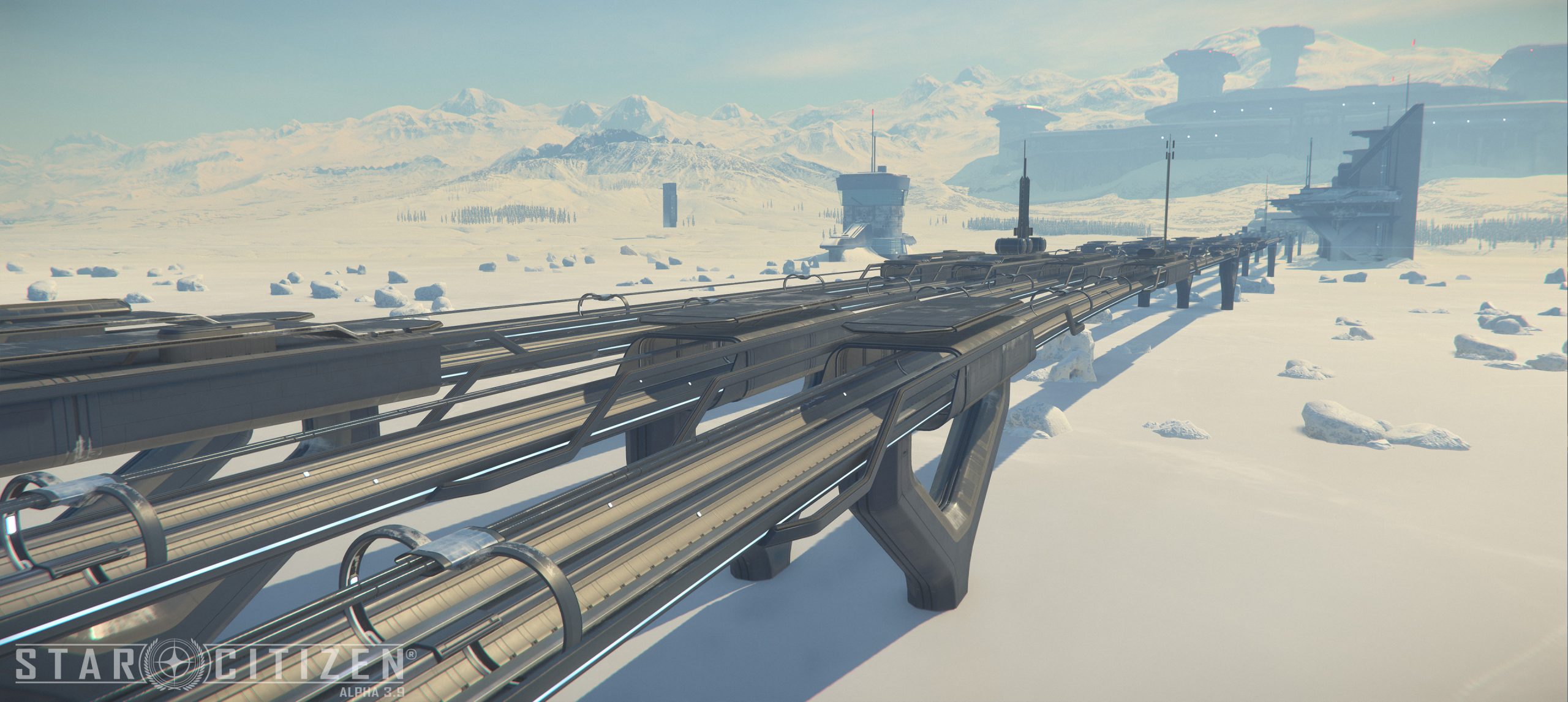
- Improved transit network design: Pendular train lines limited the amount of trains we could have operating on each line in Lorville. The resulting waiting lines is something I wanted to reduce in New Babbage. Thus, I designed two loops that have trains going in circles (in each direction) and allow players to get to their destination faster.
- Easier landing: The city of Lorville is one monolithic tile and the space port is contained within. This made it a) hard to spot and b) since the rest of the city is covered by a no-fly zone (to prevent players landing from landing in the pedestrian areas or low-poly cityscape) this meant that there is potential for innocent players having a hard time piloting their ship to be shot down by the city’s defenses. This is why I placed the space port at a good distance to the rest of the city this time.
- Condensed exits to the planet’s surface: The incentives to leave the city on foot or in a ground vehicle didn’t warrant the number of city gates in Lorville in hindsight. I applied the learnings from this by reducing the number of exits on the surface from six (in the case of Lorville) to two.
Screenshots
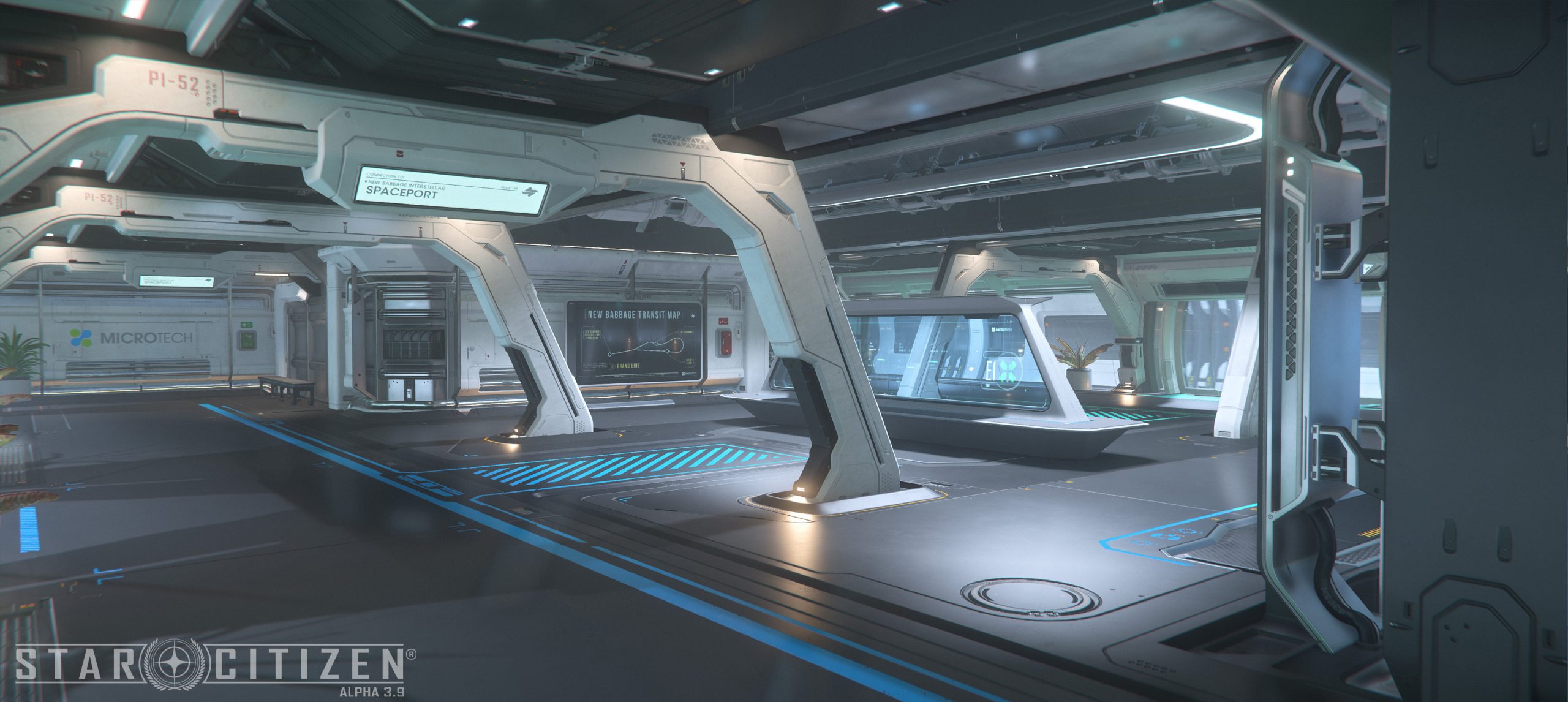
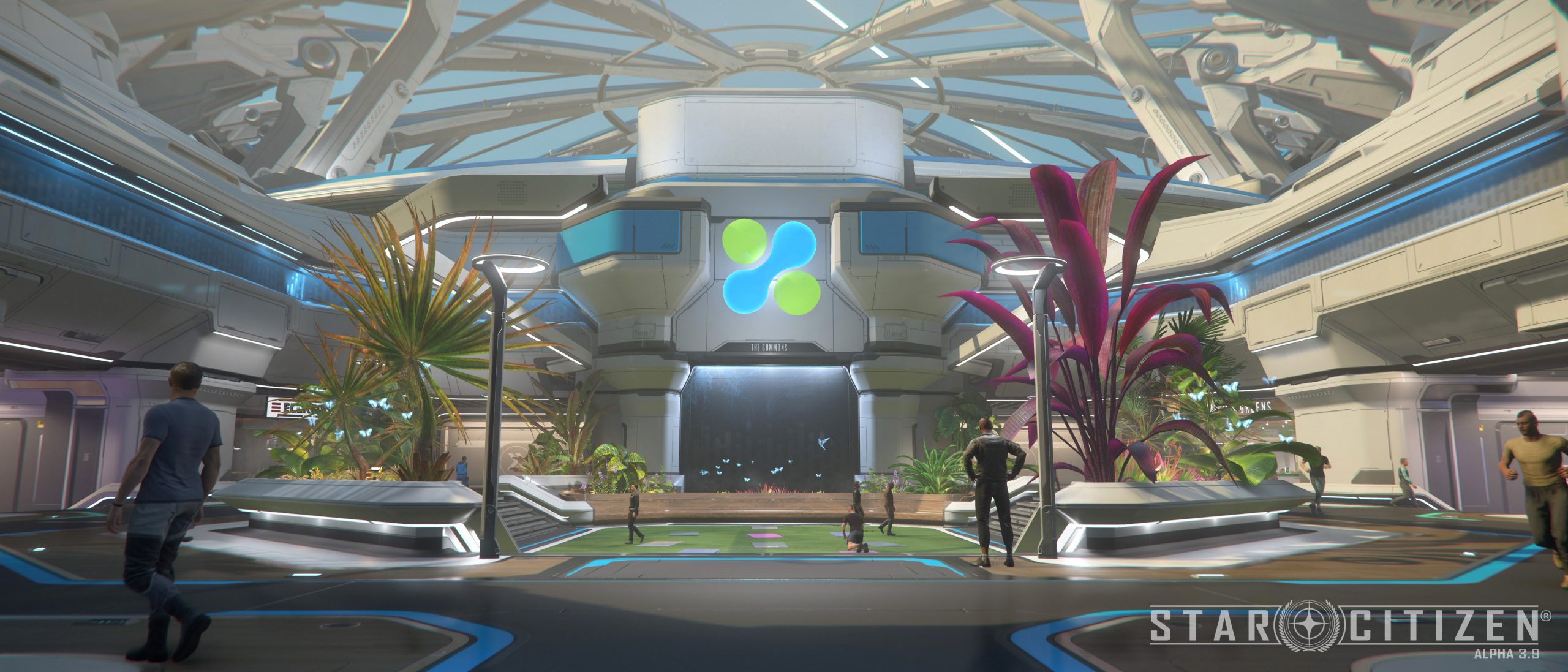
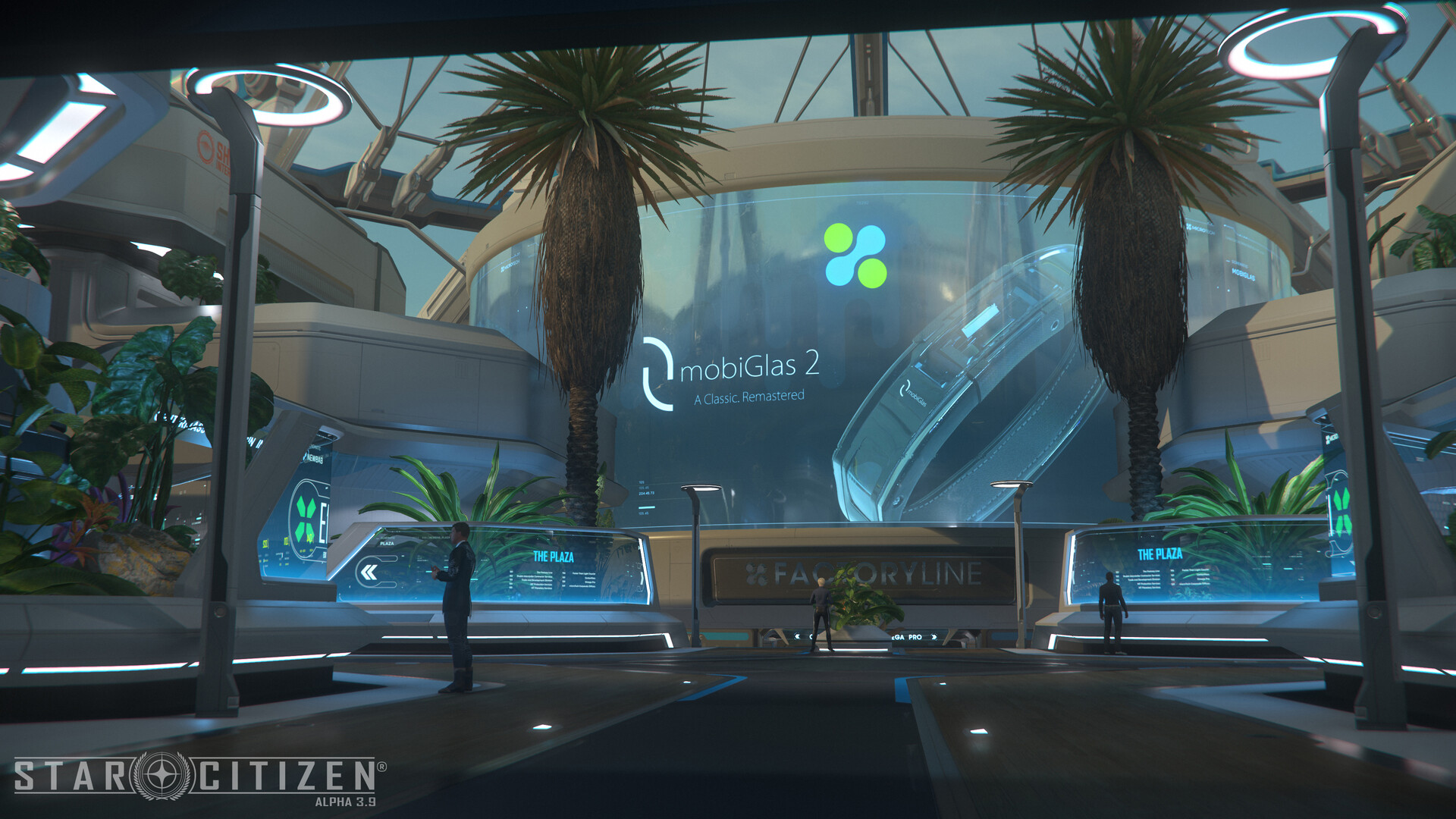
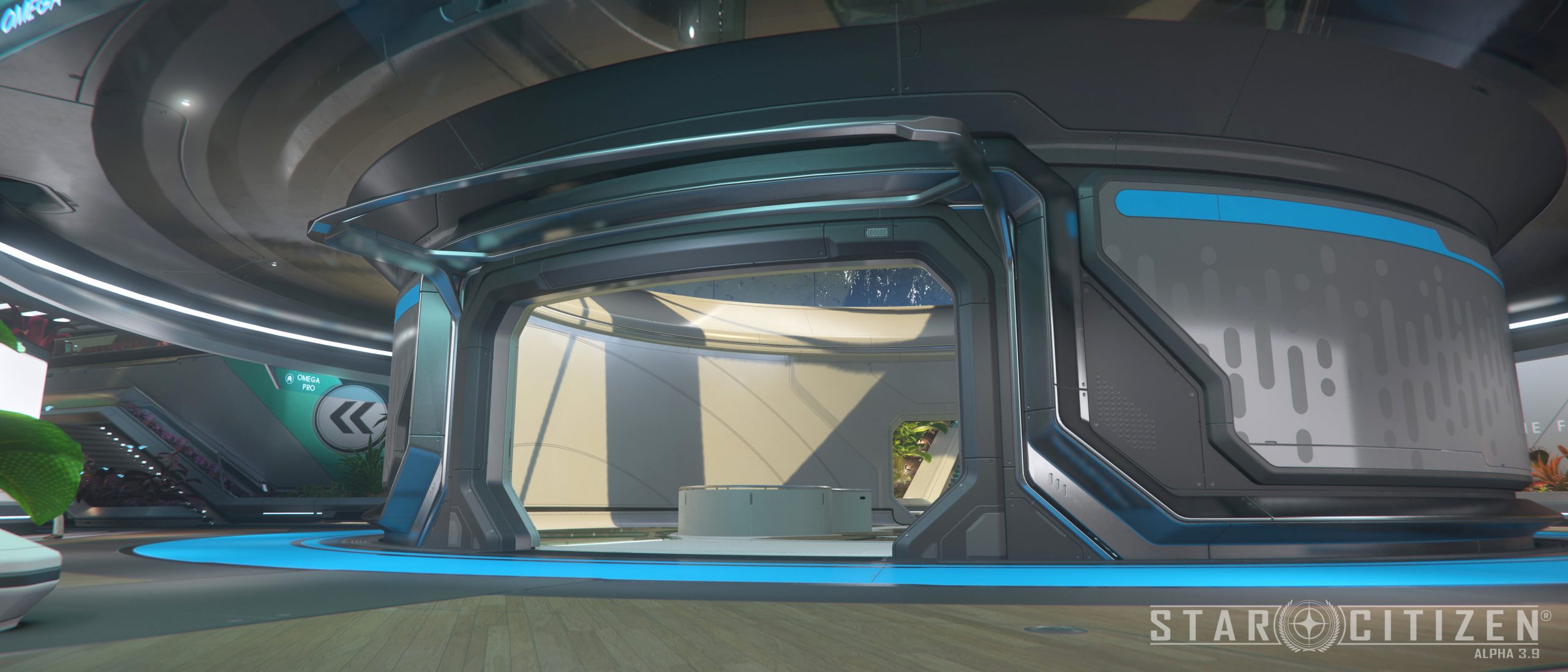
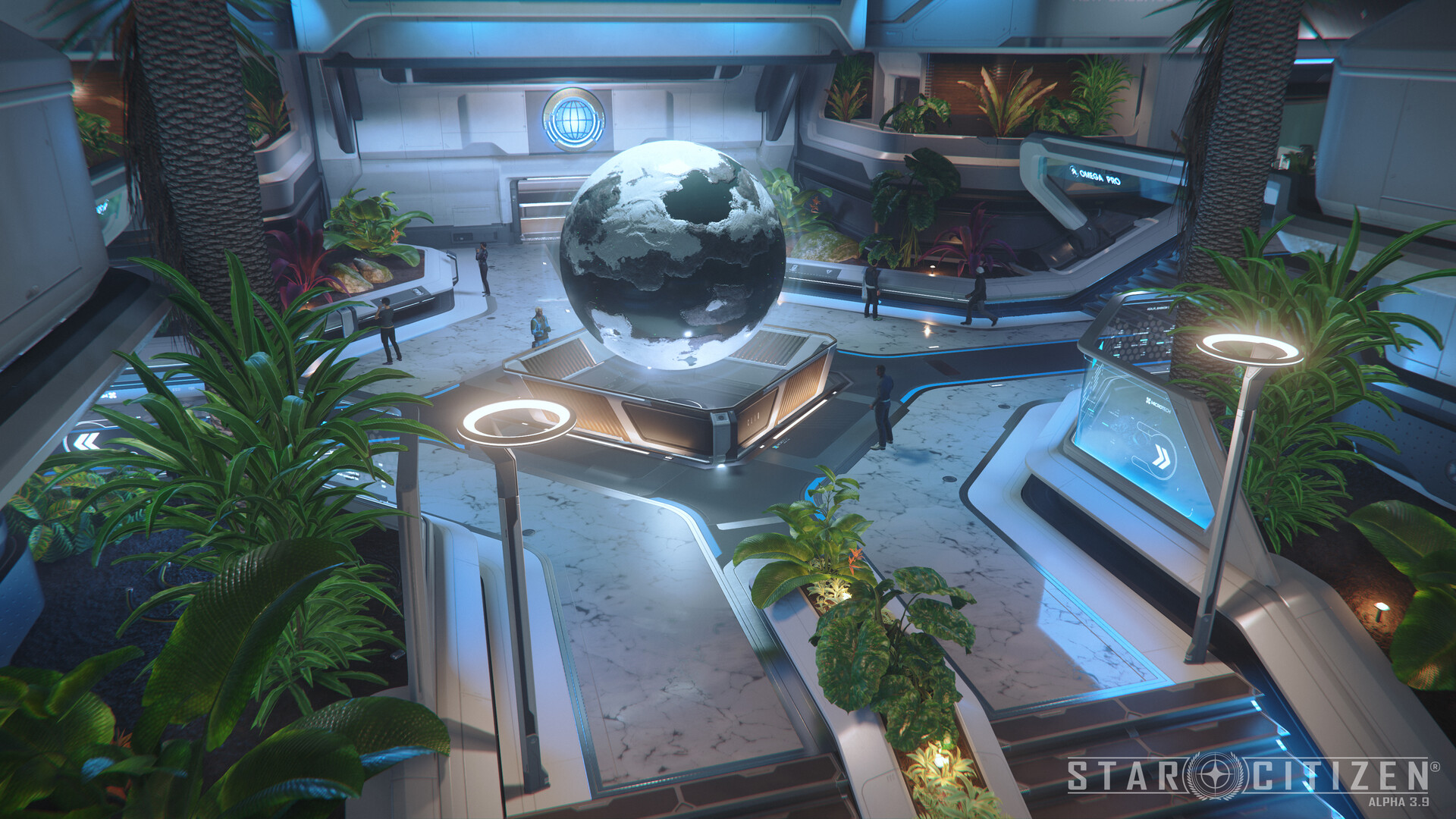
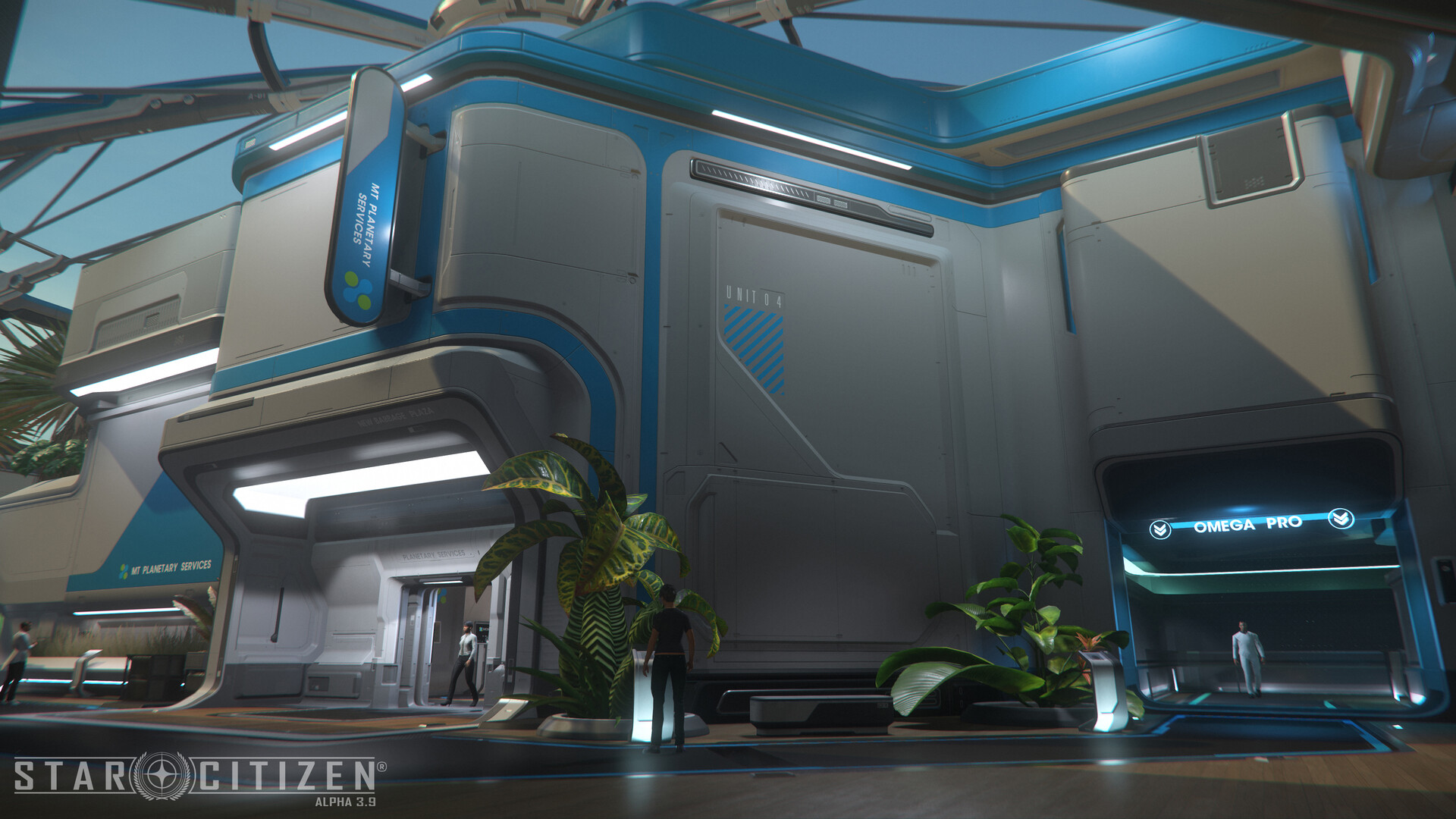
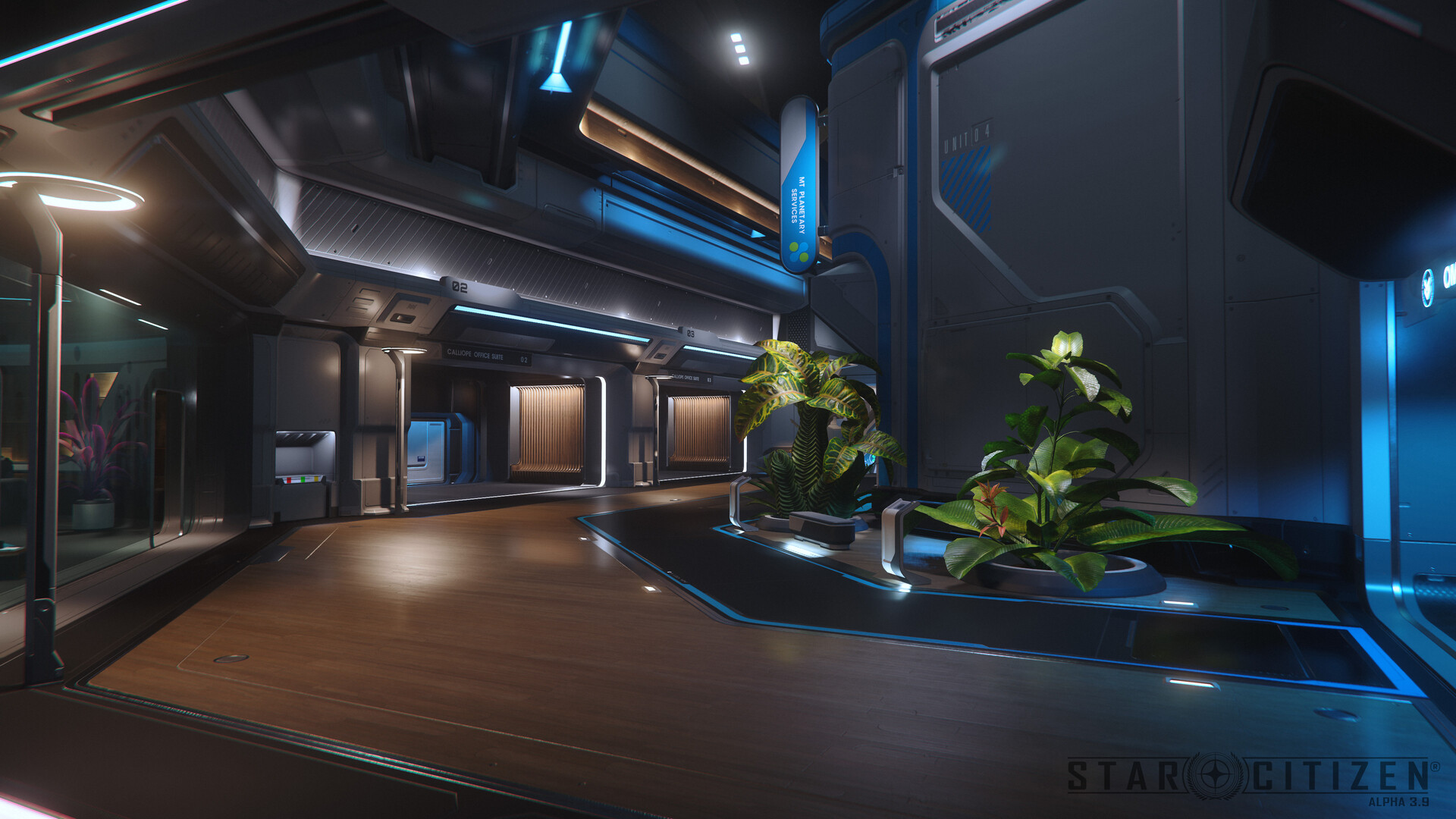
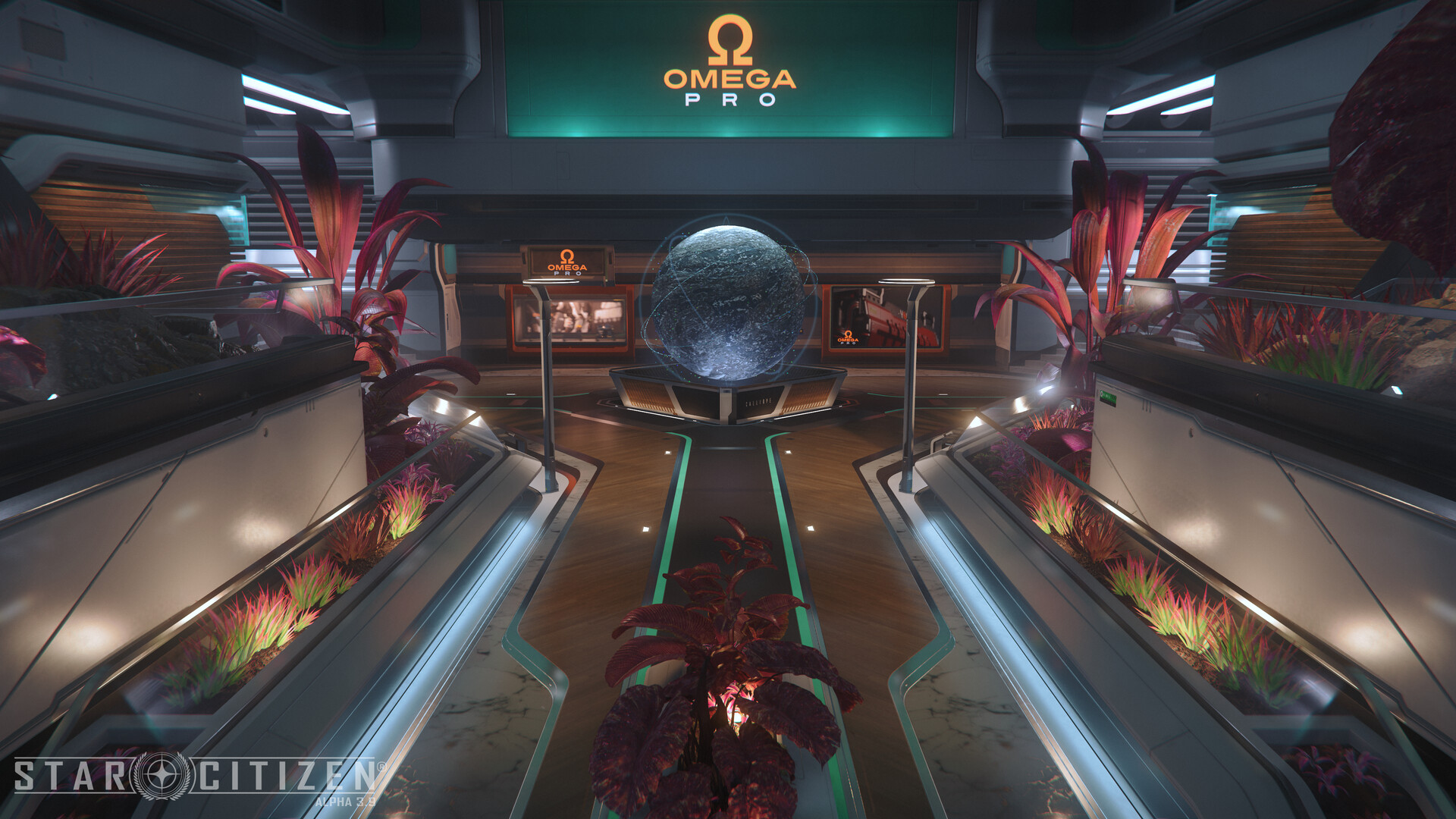
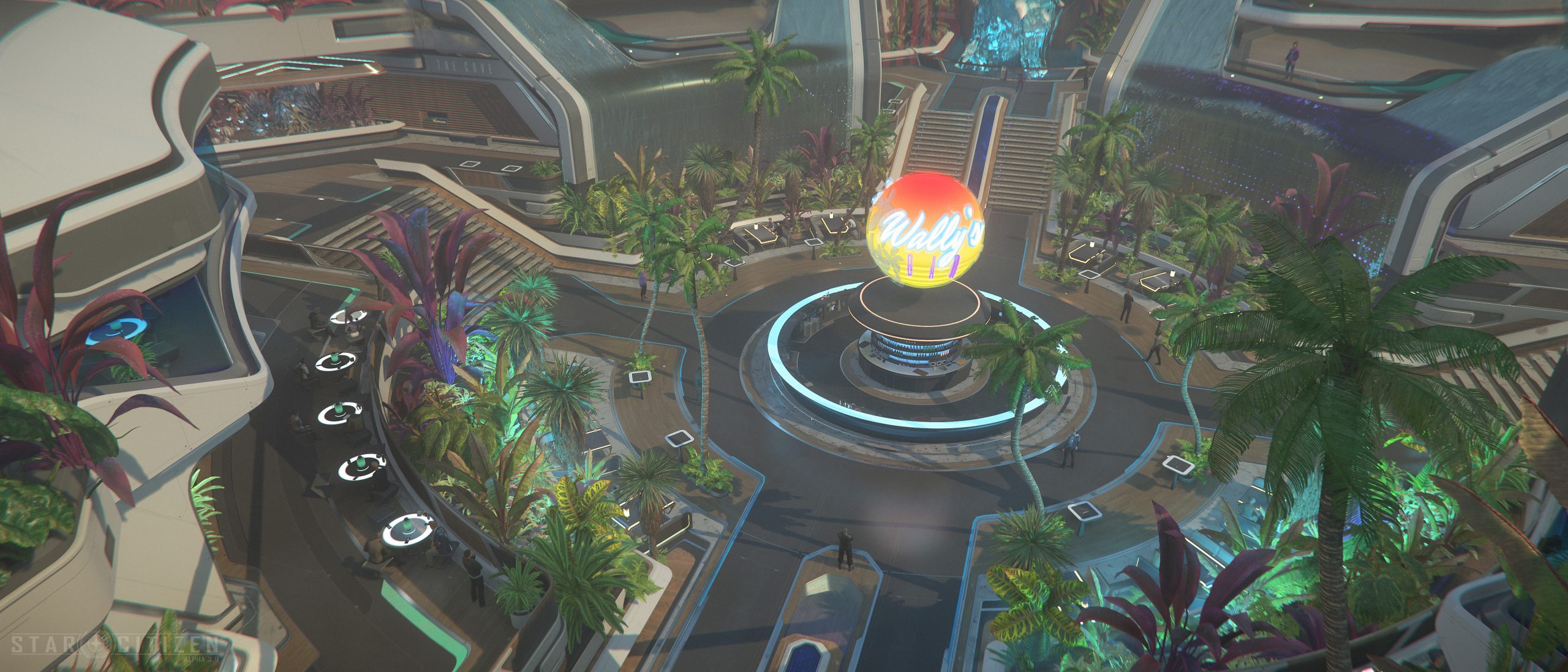
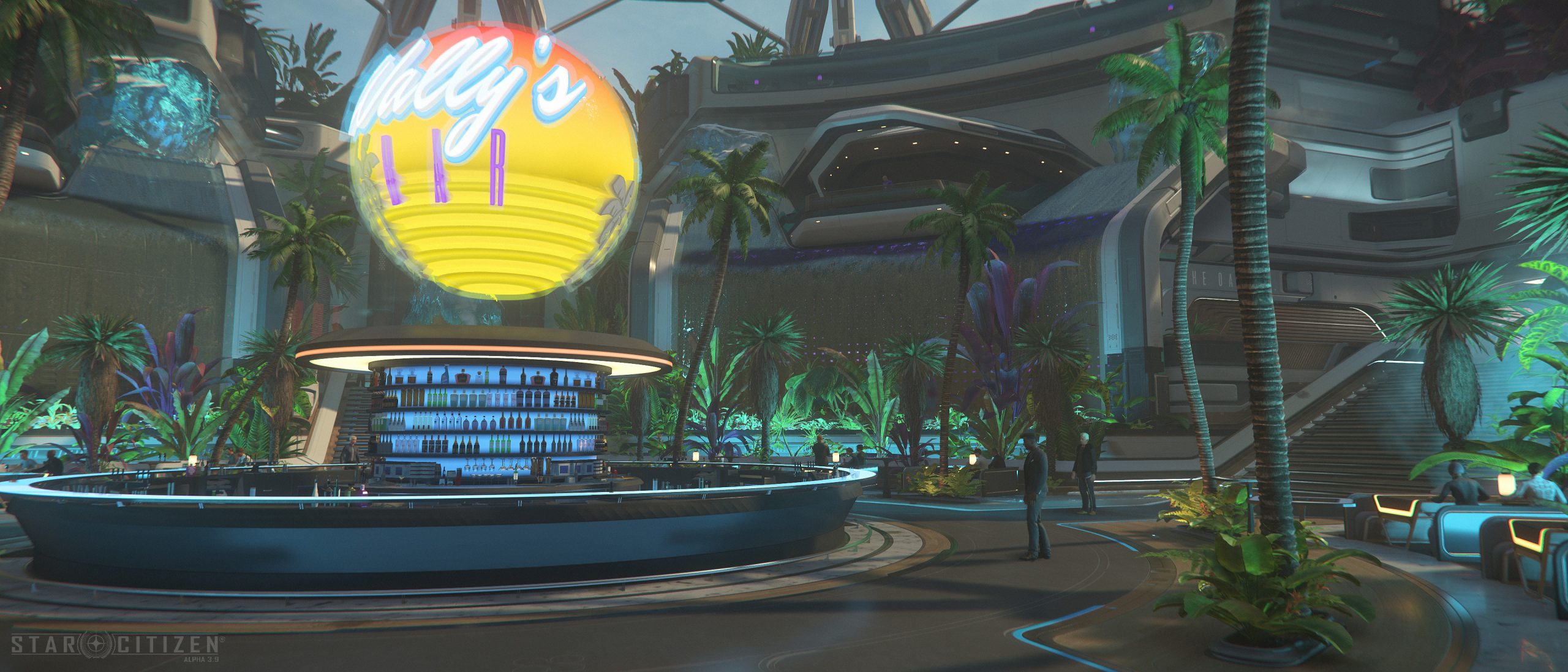
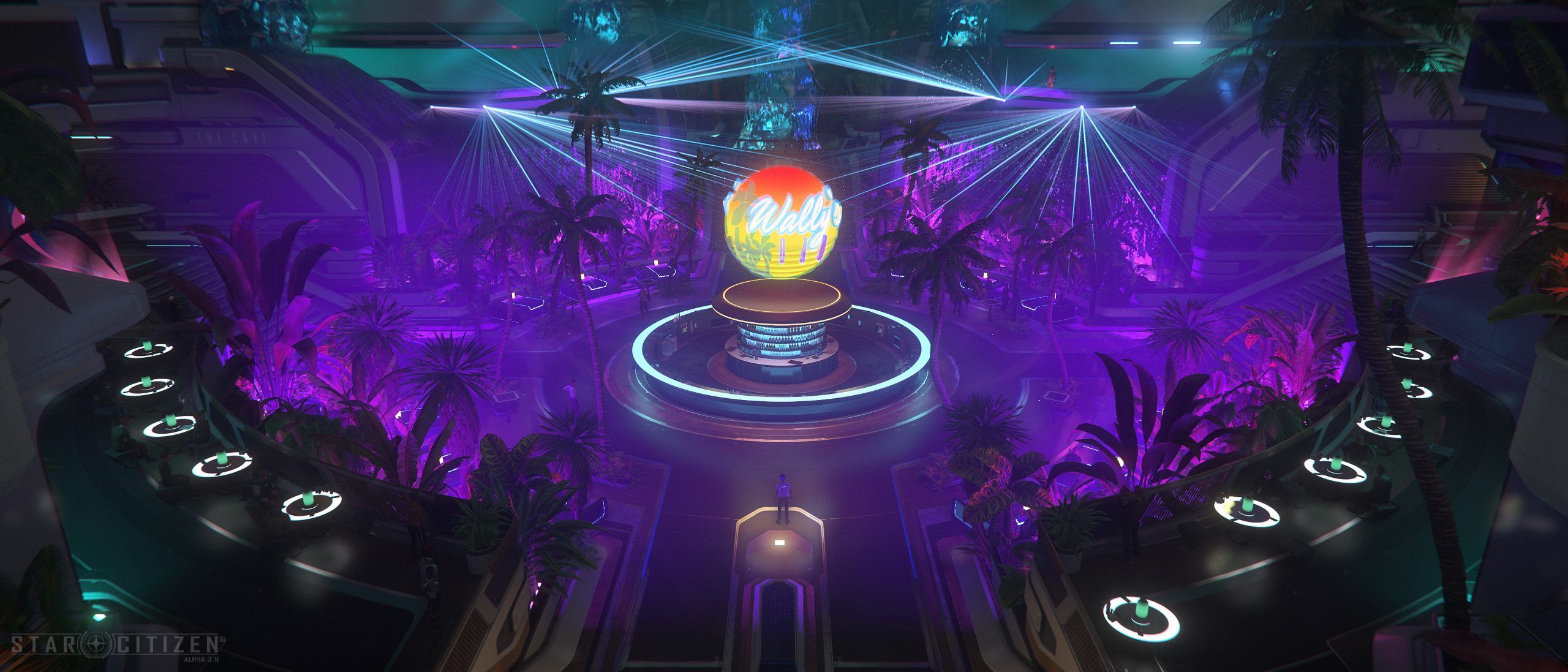
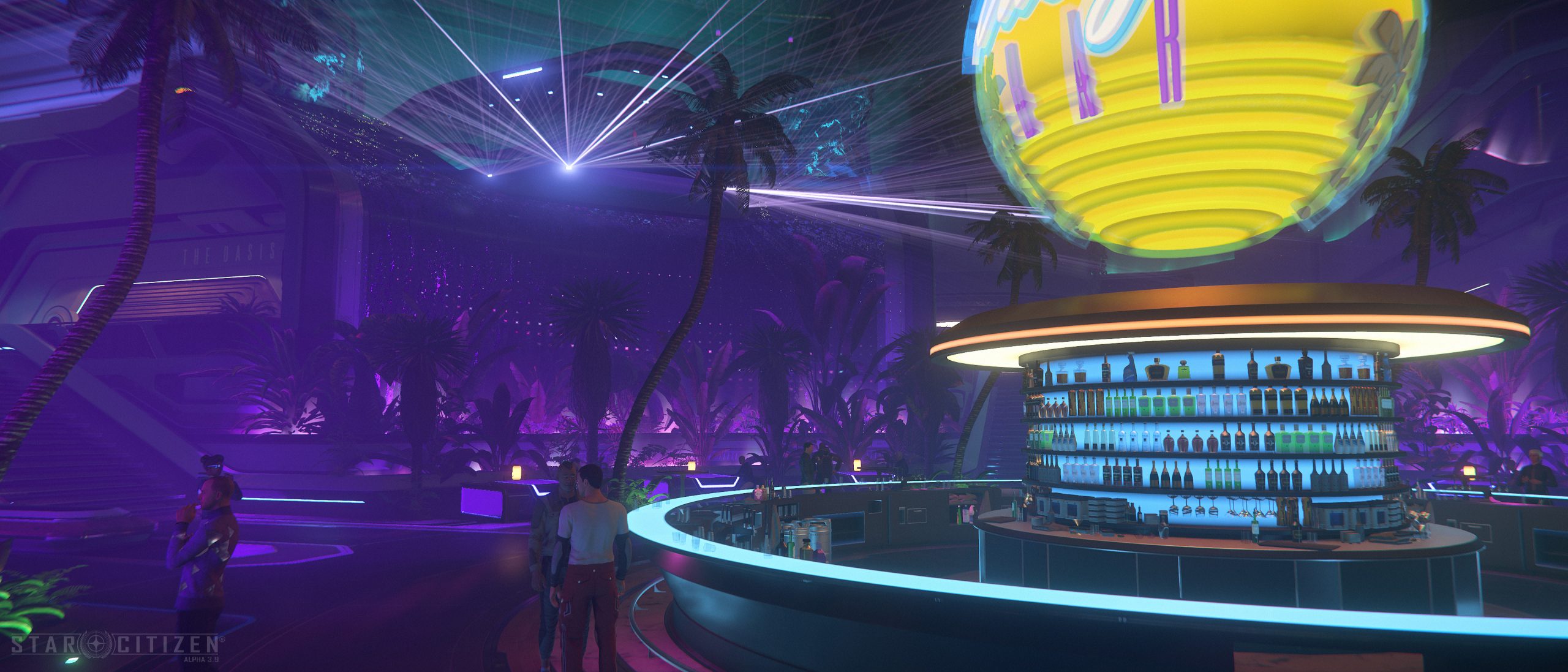
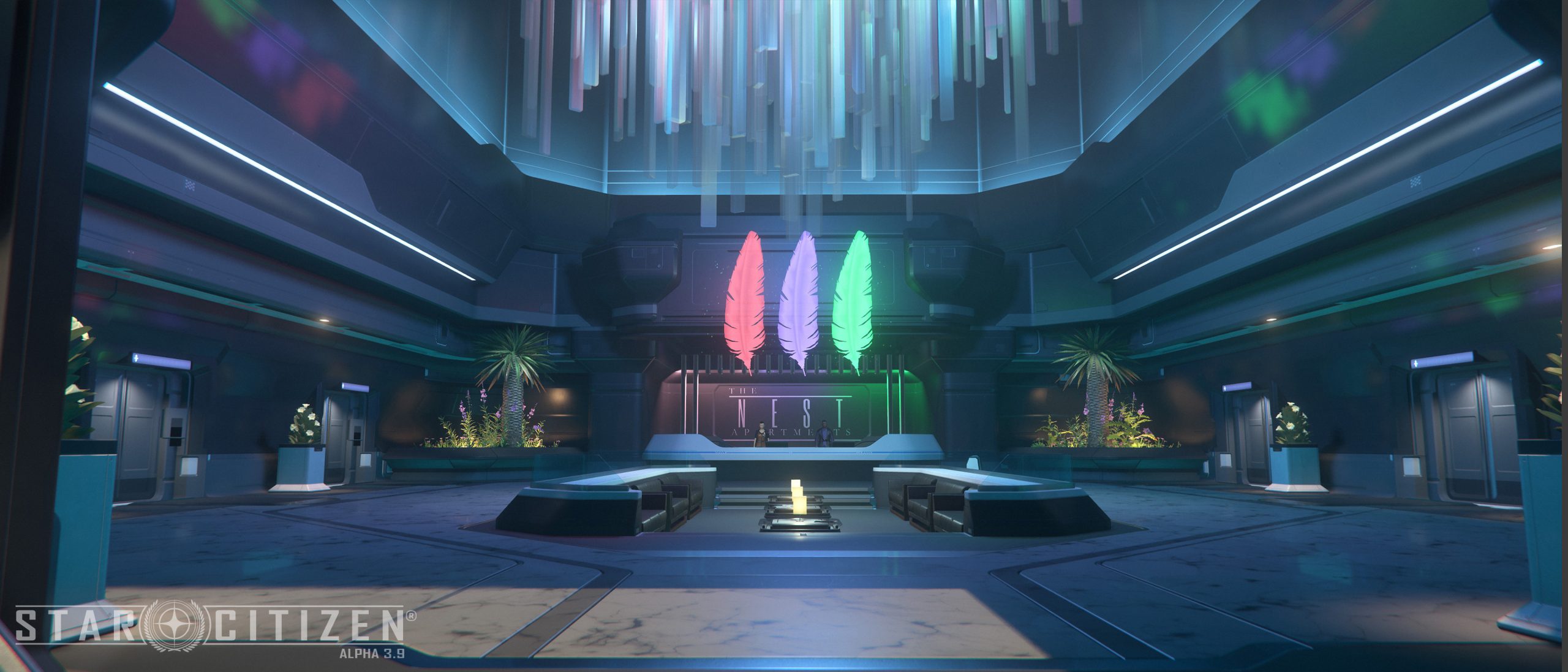
Credits: Final Art by Boy Sichterman, Jussi Keteli, Felix Lukas, Josh Van Zuylen. New Babbage header image by Mr. Hasgaha.
Developer/Behind-The-Scenes Video :
(Segment starts at 4:52)
‘COMMON ELEMENTS’
- ‘Common Elements’ is what we called building blocks for locations that are used across multiple landing zones in the Persistent Universe.
- Examples of these that I have designed are hangars, security checkpoints and transit platforms.
- They share the same functionality but depending on the location can have visual variations (lowtech vs. hightech, location-specific brandings etc.).
- They are great for standardization and faster production times.
- Ideally, they are designed with modularity in mind, that means, that they can be easily adapted to fit a specific location’s needs (e.g one track vs two tracks on a transit platform) or to introduce more variation in terms of appearance (e.g. a hangar that uses different wall and alcove modules than the others).


Screenshots by Luan Vetoreti and Daniel Harris.